
My stroke marked a profound rupture in my life. Once independent and active, I now live with severe physical disability, epilepsy, and reliance on a wheelchair. Alongside physical loss, there is erosion of confidence, independence, social role, and self‑worth. Everyday activities require assistance, and I am confronted daily by what I can no longer do. This narrowing of my life brings grief, humiliation, and sadness, particularly when observing others moving freely through a world that is now very inaccessible.
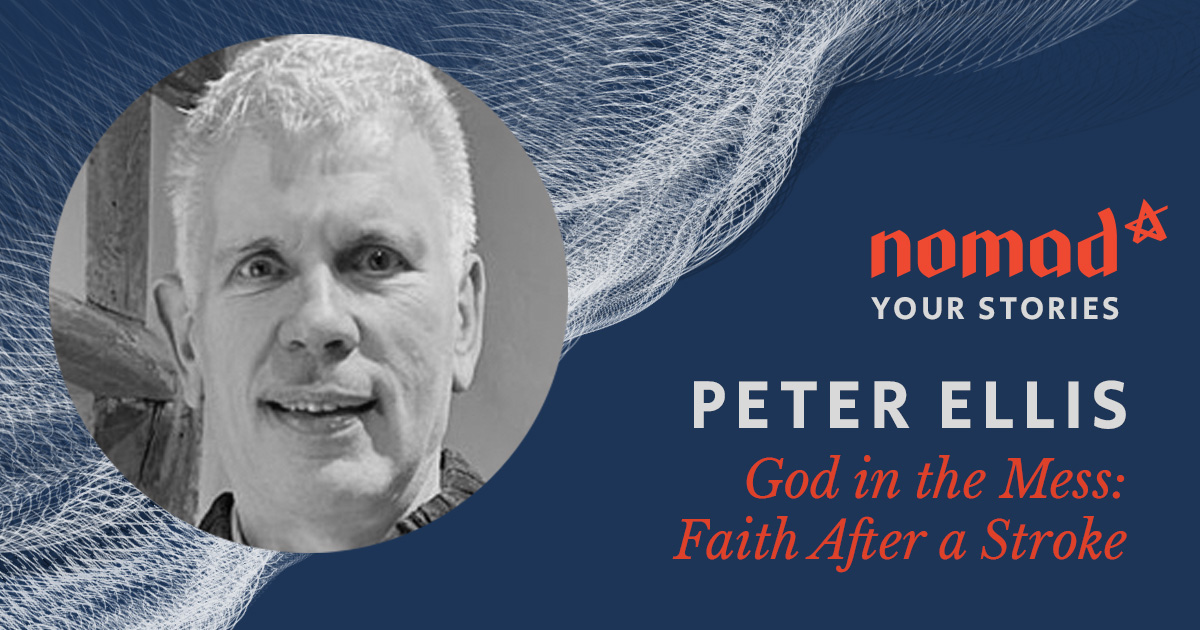
The experience also unsettled my image of God. In the aftermath of the stroke, prayer often felt empty, and God seemed absent. Rather than experiencing comfort or divine reassurance, I encountered raw vulnerability and the sheer effort of being alive. Yet I recognise this as a common spiritual experience in suffering, where faith is stripped of certainty and easy answers.
I position my experience within a broader spiritual understanding that sees suffering not necessarily as meaningless tragedy, but as something that can become transformative. Drawing on thinkers such as Julian of Norwich, Henri Nouwen, and Richard Rohr, I explore the idea that suffering can open a deeper, more honest relationship with God. Rather than striving for explanations, spirituality becomes about surrender, presence, and learning to live truthfully within pain.
Before my stroke, I had already questioned aspects of the evangelical faith tradition in which I was raised. The stroke did not derail this process of deconstruction but intensified it, moving me from inherited beliefs toward a more spacious and mature faith. I describe my journey as moving through order, disorder, and eventually toward a new, deeper integration. Faith, for me, is now less about certainty, reward, or punishment, and more about relationship, humility, and staying present within uncertainty.
A central theme is the question of where God is found in suffering. I recount a story from the Holocaust in which God is said to be present “deep in the poo and the mess” rather than distant from it. This image resonates deeply with my own experience. I find God not in escaping my brokenness, but in companionship within it: in the care and patience of my husband, in my own tears and frustration, and in the difficult acceptance of dependence on others. God is not removed from shame, loss, or bodily vulnerability, but fully present within them.
I identifiy three interrelated dimensions of spirituality that have shaped my life since the stroke. The first is internal spirituality: the quiet, deeply personal work of listening to the soul, wrestling with grief and longing, and seeking meaning amid loss. The second is contemplation and stillness. In suffering, silence and honesty become sacred spaces where prayer may take the form of sitting, breathing, crying, and simply being. Contemplation allows pain to be acknowledged rather than suppressed, opening the possibility of inner transformation. The third dimension is compassion expressed through action. Spirituality inevitably flows outward into care for others, often in modest and unseen ways.
As a chief executive of a children’s hospice, I reflect how accompanying others through suffering was once central to my vocation. Now retired, and no longer lead in the same visible ways, I continue to live out my calling through quieter acts of service. Establishing a local stroke support group has become a meaningful expression of my compassion and solidarity, offering shared understanding, friendship, and hope. Hearing a fellow survivor say, “this gives me hope,” affirms that my life remains purposeful and valuable.
I do not claim that suffering is a gift, nor do I offer easy resolutions. Instead, I suggest that suffering has created space for a more honest encounter with God and self. Spirituality, as I now understand it, embraces doubt, welcomes people of all beliefs, and honours the sacredness of vulnerability. Healing is not about escaping pain, but about presence within it. Faith is not clarity or certainty, but the courage to remain in relationship and conversation.
In closing, I offer reassurance to others living with pain or loss: you are not alone, and you still matter. I end with a prayer that expresses grief, longing, and fragile hope, holding together despair and trust. Hopefully my honest reflection affirms a spirituality grounded not in strength or answers, but in shared humanity, compassion, and the quiet resilience of “rebellious hope.”
I offer this prayer for myself, and maybe for you too:
God of the broken
I don’t know how to live this life now.
Everything feels smaller, harder, lonelier.
I miss who I was. I miss what I could do.
Some days, I miss wanting to go on
If you are near, then be near to me here—not in the place I used to be,
but here, in this painful, narrow place.
Let me know that I still matter. That I am still yours.
Help me carry this sorrow with honesty.
Help me see, one day, some light ahead.
Even if I can’t walk far, or even hold things well
Let my soul still walk with you and be held by you
Even if I can’t speak clearly,
Hear the truth I cannot say. Hold me now. That’s all I ask.
I am still here. I am still learning. And maybe, slowly, quietly, I am being remade.
Peter Ellis
If you’d like to know more about Peter and his ongoing journey, his website is here.