
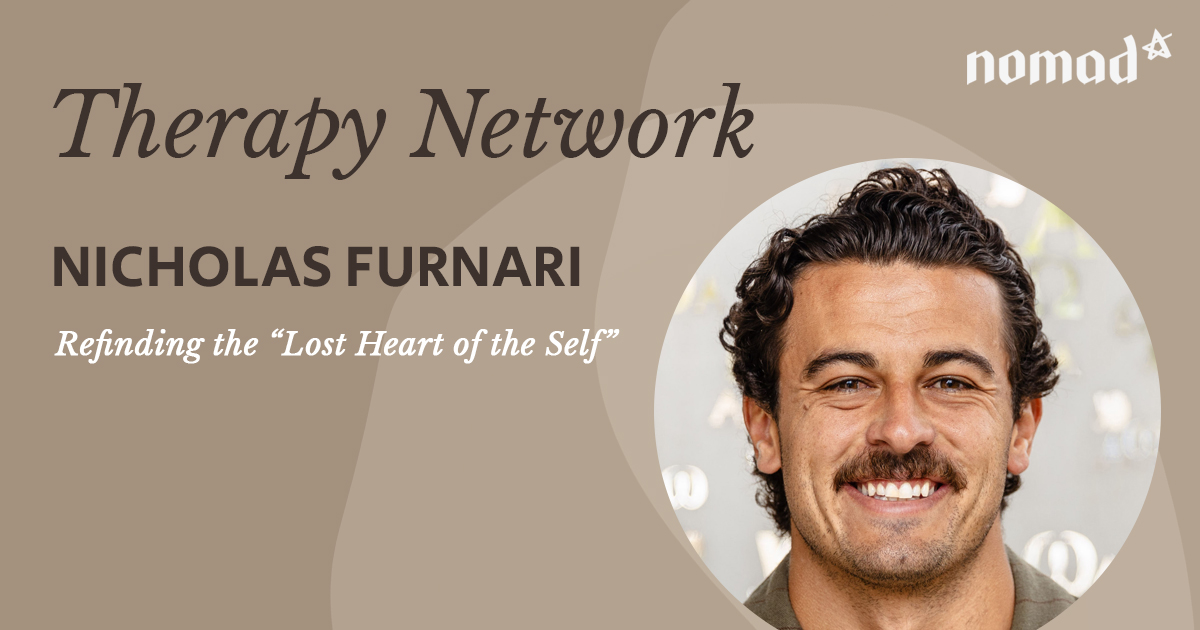
Hi, I’m Nick and this is my story.
Raised in a conservative Christian household, I internalized many values. Some beautifully formative, some painfully so. I quickly learned that my own anxieties surrounding belief, dogma, and practice looked and felt quite different from my surrounding community. I could not figure out why some people felt such comfort, peace, and delight in their belief system while I experienced anxiety, tension, fear, and a pervasive feeling of being “not worthy of love”. I felt terrifyingly alone. I felt torn between a god I was afraid of but couldn’t leave for fear of punishment forever.
I eventually learned that many of these fears were actually part of a deeper obsessive scrupulosity, endlessly searching for answers that could not be found. When I began undergraduate studies, I was exhausted with religion and a god I felt was so much less loving than my closest friends and family.
Psychology became a healing balm. Beginning with authors like Jung and Freud, I found in their analyses of the suffering of humanity–and their efforts to address it– a commitment toauthentic healing I had seldom experienced in my life. At the same time, I met a mentor, himself a therapist and professor, who embodied love, joy, and compassion more fully than any I had known. I knew I wished to pursue deeper education in the field in the form of a Doctorate in Clinical Psychology.
Psychology–from the root words psyche-pathos-logos–means ‘speech of the suffering soul’. This single understanding became and anchor for my personal and professional life. I felt my eyes had been opened. No longer could I just see the characteristically human experiences of pain and hurt. I wished to understand how and why these experiences come to be and how to heal them.
Paul Tillich spoke of the “god above god”, that which is necessarily above even our most grand conceptions of the Divine. Psychology became a means for accessing the suffering covering over one’s Divine core. If philosophy and religion spoke to the “what” we are at our core, psychology became a means of “how” we might access it.
The symptoms I saw in myself, and patients became a mouthpiece directing attention to the underlying yearnings for love and healing that would set one free to live the life they were destined to. I also witnessed how these symptoms were coherent means of holding oneself together until a deeper healing could be accessed. They were not accidental byproducts to get rid of. They were strategies of an incredibly complex psyche for holding itself together for the potential of later growth. As I worked with patients, I often found myself in awe of just how this person was still here, even after all they endured.
Psychotherapy became an embodiment of spiritual communion dedicated to the growth of another–and oneself.
As my graduate studies progressed, personal and clinical experience drew me to emotionally focused methods and a commitment to helping those with obsessive and compulsive symptoms. My doctoral dissertation focused on addressing new models that could be applied to not just compulsive actions, but compulsive thoughts, beliefs and the self-limiting fears attached to them. I began teaching other therapist, presenting at international conferences and continuing my clinical work. I currently continue to see patients from a wide range of backgrounds, but with a specialty in obsessive-compulsive symptoms, scrupulosity, and anxiety. I believe my background helps me meet such struggles in another with compassion, humility and care.
Today, if I think about my spiritual beliefs, I rarely experience a sense of vitality in such reflections. Instead, I find the Divine in activity, in the acts of living and loving. I believe, like the psychologist Erich Fromm, that love is the active care and concern for the growth of that which we love, and this includes ourselves. I am passionate about helping people find their purpose and meaning–even amidst suffering. The potential of our psyches to heal even the most injurious experiences is enough of a reason for me to know I don’t need to “believe” anything–rather I can experience it on a regular basis.
I think authentic belief must necessarily translate to authentic action. Whatever one’s beliefs are, I am committed to helping individuals embody their deepest potential in life and in love through the necessary healing of what keeps them stuck.
I’m humbled and honored to help those who wish to embark on that journey.
Nicholas Furnari
If you’d like to work with Nick, you can contact him here.