
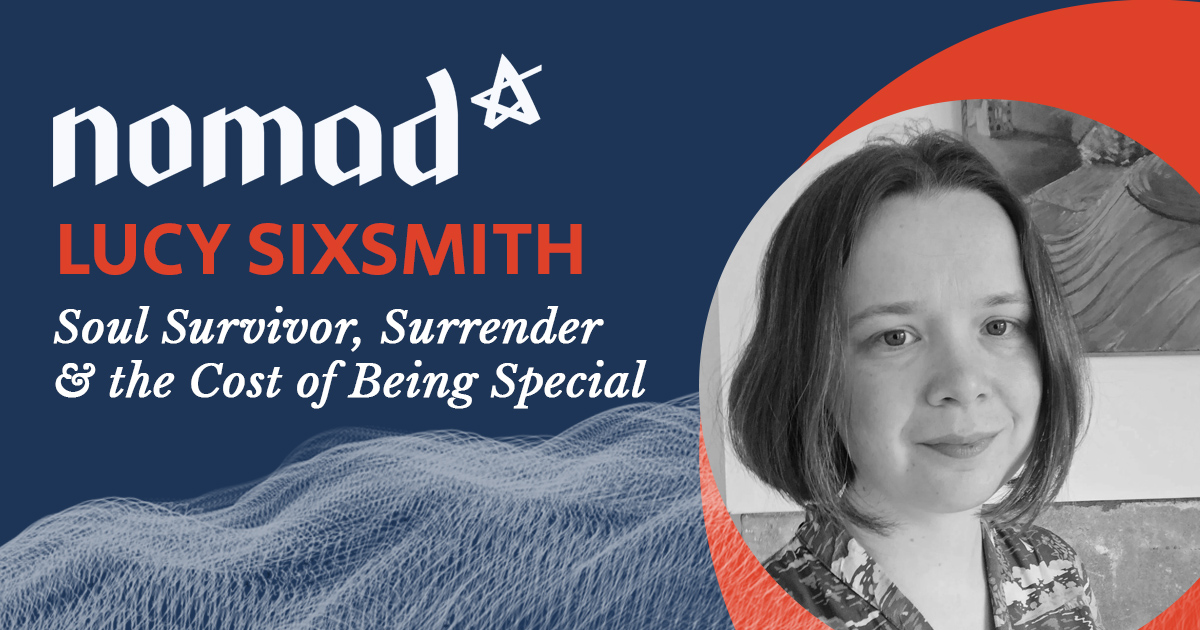
Lucy Sixsmith joins Nomad to explore the world of Soul Survivor and the wider charismatic culture that shaped so many young Christians in the 1990s and 2000s. Drawing on her new book When the Music Fades, Lucy reflects on surrender language, “chosen generation” spirituality, and the subtle ways power can operate in spaces that feel warm, funny and down to earth.
Together we ask what happens when revival language, humility and the longing to be part of something bigger become tangled up with pressure, disappointment and the cost of being “special”. This is a conversation about youth, worship, authority, memory and what, if anything, remains when the music fades.
After the interview, Tim and Nick reflect on their different experiences of Soul Survivor and the charismatic culture around it. They explore surrender, revival, and the pressure of “changing the world”, asking whether what felt like surrender to God was sometimes also a surrender to the culture itself.
It’s a thoughtful conversation about power, disappointment, and what a more grounded faith might look like when the intensity fades.
Interview starts at 17m 22s
BOOK
When the Music Fades: Power, Surrender and the Soul Survivor Generation
QUOTES
“At the point when I left school, I already thought that I was a bit of a failure for not starting a citywide revival.”
“I think also we don’t realise that a performance of humility could actually be a kind of power grab.”
“I think maybe a loving God would want kids to know that their bodies are their own and their boundaries are their own.”
One Response
Hi, this is a really interesting podcast and the comments by Lucy along with the experiences of Tim and Nick touched a nerve and brought up things that I had not thought about for many decades.
I was only at one Soul Survivor in the mid 90s and didn’t like it but I was absolutely in a “new wine” church in my late teens along with other young people who used this language; I had not been able to organise my feelings about the “giving it all up” and “being part of something huge” thing until Lucy expressed it so well. I will say that although it seemed so real when I was 16, it is no use to me as a 50 year old man. I overwhelmingly I look back at this as being an empty period where nothing much was learnt to help navigate adult life despite it claiming so much. It wasn’t so long after this that I went to university then adulthood really rushed at me with marriage and bringing up a child.