
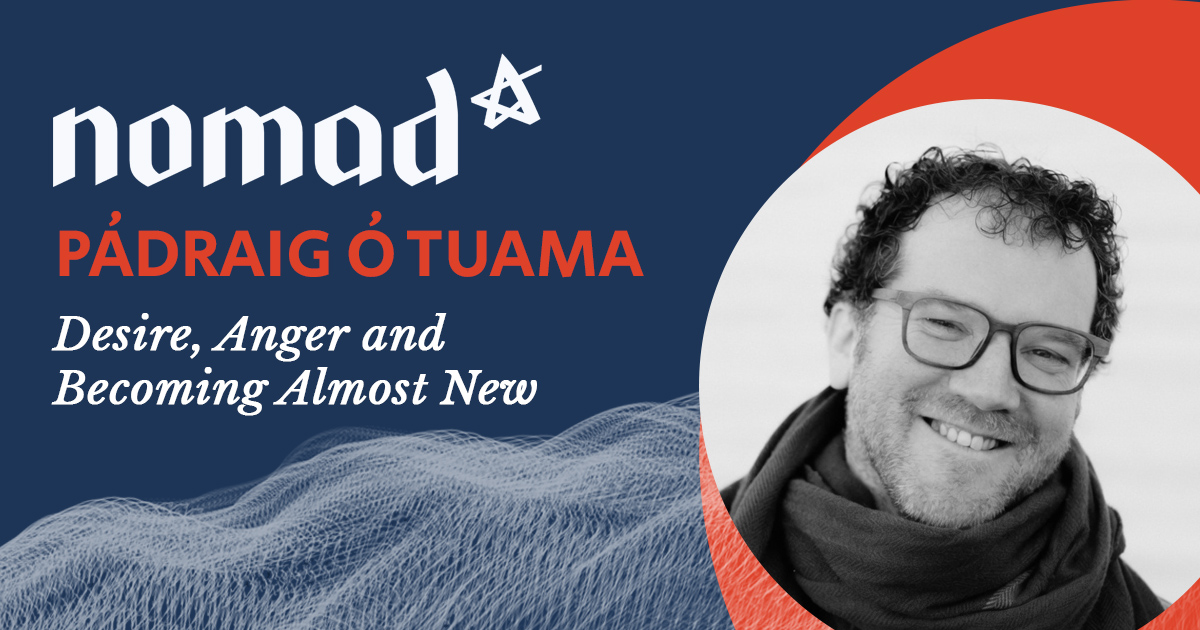
Pádraig Ó Tuama returns to Nomad for a conversation about the stories we inherit, the desires we’re taught to mistrust, and what happens when religious language gets tangled up with shame. We talk about scripture, poetry, anger, masculinity, friendship and the strange ways God can remain present even after religion has caused harm.
Along the way, Pádraig reflects on exorcisms and reparative therapy, the body’s capacity to know before the mind catches up, and why anger can become a creative energy rather than something to fear. We also explore what it means to become “almost new” — not through a neat story of healing, but through friendship, attention, prayer, birds, and the slow work of learning how to live differently.
After the interview, Nomad hosts Tim and Anna pick up some of the threads Pádraig left dangling: what do we do with anger once it stops being something to fear, why can faith remain strangely compelling even after it has caused harm, and what might our images of God reveal about us?
Interview starts at 12m 22s
WEBSITE
SOCIALS
BOOKS
Poetry Unbound: 50 Poems to Open Your World
44 Poems on Being with Each Other
In the Shelter: Finding a Home in the World
QUOTES
“Anytime we speak about God, we’re speaking about ourselves.”
“Anger is an energy… How is it that I use anger as a tool? Not a tool to hurt myself and hurt others, but as a tool to make something.”
“Every theology is in many ways an anthropology that has some stories of God added.”